How to Start a Football Club and Build a Lasting Legacy
- Feb 14
- 18 min read
So, you've decided to start a football club. What an incredible adventure you're about to begin! It’s a journey that boils down to a few key things: figuring out your purpose, sorting the legal bits, planning your budget, and getting players and coaches on board. This guide is here to help you turn that spark of an idea into a fully-fledged club, ready for its first matchday. This is your chance to build something amazing for your community.
From Sideline Dream to Sideline Reality
Every great club, from the local legends to the giants of the game, started with someone’s passion. Right now, you're standing at that same starting point, dreaming of creating a space where players can grow, learn, and truly fall in love with football. This is about more than just a kickabout in the park; it's about building a community and shaping the next generation. That ambition you feel? It’s not just possible—it’s powerful.

The road to creating a club begins with a clear vision. Before you even start thinking about kits or pitches, you need to nail down your club's purpose. This vision becomes your North Star, guiding every single decision you'll make, from the coaching philosophy to the culture you foster on the touchline.
Defining Your Club’s Identity
First things first: what kind of club are you building? Is this going to be a competitive powerhouse focused on winning, or a grassroots hub dedicated to player development? Will you be chasing trophies or making sure every single kid gets fair playing time and improves their skills? There are no wrong answers here, but having a clear identity from day one is your key to success.
Think about which path feels right for you:
A Development-First Hub: Here, the focus is squarely on player growth, sportsmanship, and technical skills. Success isn’t just about the final score; it's measured in individual improvement and a genuine love for the game. This is where you nurture the future stars.
A Competitive Force: This model is all about competing at the highest level possible. You'll be looking to attract driven, talented players who want to win. The emphasis will be on tactics, peak performance, and climbing the league table. This is where you build champions.
This core decision will directly influence your coaching philosophy. A development-focused club might lean towards a patient, possession-based style, while a more competitive outfit might opt for a high-press, fast-attacking game.
Your club's values are the promises you make to your players and their families. They are the bedrock of your culture and what will make people proud to wear your badge.
In the end, your mission statement should capture this spirit in a few powerful sentences. It’s the rally cry that will inspire coaches to join you, parents to trust you, and players to give it their all, week in, week out. This is the moment your sideline dream starts to feel real.
Laying the Groundwork: Your Club's Official Kick-Off
You’ve got the vision, the passion, and the drive. Now it's time to build the solid foundation that will support your club for seasons to come. This is the moment your dream gets its official badge and becomes a real, recognised entity. It might feel like a daunting pile of paperwork, but by tackling it one piece at a time, you'll see it's an exciting part of the journey. This is how you create a professional, secure home for every player, parent, and volunteer.

Don't underestimate this stage. A well-organised club doesn't just run more smoothly on a day-to-day basis. It builds confidence with parents, attracts committed volunteers, and fosters an environment where young players can just focus on falling in love with the game.
What Kind of Club Will You Be?
Your first big decision is choosing the right legal structure. This isn't just a box-ticking exercise; it shapes how you’ll operate, manage your money, and handle responsibility. For most new youth football clubs, there are really two main paths you'll want to consider.
Most clubs start life as an Unincorporated Association. It's the simplest and most common route for a reason. You're essentially a group of people coming together for a common goal, guided by a club constitution. It’s straightforward to set up and works perfectly for smaller, community-focused clubs where the financial risks are low.
If you're thinking bigger, you might opt to become a Company Limited by Guarantee. This structure offers limited liability protection for the people running the show. That means if the club ever ran into financial difficulty, your personal assets are safe. It’s a bit more formal and means registering with Companies House, but that extra layer of security can be a huge plus if you anticipate handling significant funds or owning assets like a clubhouse.
Writing Your Club's Rulebook
Whatever structure you land on, your club constitution is the single most important document you will create. Think of it as your club’s DNA. It lays out your mission, defines who does what on the committee, and explains the rules for everything from annual general meetings (AGMs) to how you'll handle disagreements.
A rock-solid constitution should cover:
Your Club's Name and Mission: Who are you and what are you here to do?
The Committee Roles: What are the specific duties of the Chairperson, Secretary, Treasurer, and your all-important Club Welfare Officer?
Membership Guidelines: How do people join? What are the expectations? What are the subscription fees?
Financial Rules: A clear process for how the club's money is managed.
Disciplinary Procedures: A fair and transparent system for when things go wrong.
This document is your promise to your community that the club will be run fairly and transparently.
Your constitution isn't just a formality. It’s a public statement about your values and your commitment to creating a safe, well-run club. It’s the bedrock of trust.
Making It Official: County FA Affiliation
The final, non-negotiable step to becoming a proper club is affiliating with your local County Football Association (FA). This is what officially puts you on the map. It registers your club within the national football family, making you a legitimate part of the grassroots game.
You'll join the ranks of over 10,000 affiliated clubs across the UK by paying an annual affiliation fee, which is usually somewhere between £100-£200 per team. This is your pass to enter leagues, play in official competitions, and get support from the FA.
Affiliation is essential. It provides vital public liability insurance and gives you access to qualified referees for your matches. More importantly, it shows parents and players that you are a serious club, committed to the high standards set by The Football Association. For youth teams, this means strictly adhering to safeguarding protocols, which ensures every child can enjoy football in a safe and supportive environment.
Running a club requires the same agility as managing a team on the pitch. The best teams adapt their tactics, and the best clubs are just as flexible in how they operate. You can even see how the pros do it in this analysis of team formations from the Premier League. By getting these foundational steps right, you’re not just starting a club—you’re building a legacy.
Fuelling Your Club with a Smart Financial Strategy
Passion is the spark that gets your club off the ground, but a solid financial plan is the fuel that keeps it running season after season. Building a resilient club isn't about chasing huge profits; it's about creating a stable, stress-free environment where your players, coaches, and volunteers can thrive.
This is your guide to mastering the numbers, so you can get back to focusing on what truly matters—the beautiful game.
A clear budget is your financial roadmap. It helps you anticipate every cost, from the obvious to the unexpected, making sure there are no nasty surprises down the line. It’s the difference between confidently ordering new kits and scrambling to cover referee fees last minute.
Mapping Out Your Financial Future
Your first year's budget is arguably the most critical one you'll ever create. You’ve got to account for both the one-time setup costs and the recurring expenses that will become the regular rhythm of your operations. Let's break down what that really looks like.
Initial one-off costs are the hurdles you need to clear right at the start. These often include:
Kit and Equipment: This is usually the biggest initial spend. It covers everything from playing strips and training gear to footballs, cones, and goal nets.
FA and League Registration: These are your annual tickets to play. They're non-negotiable.
Then you have the recurring monthly or seasonal costs – the regular beats that keep your club's heart pumping. These are things like pitch hire for training and matches, referee fees, and ongoing admin expenses. Thinking about these early helps you set realistic subscription fees from day one.
A great budget doesn't restrict you; it empowers you. It provides the clarity needed to make confident decisions, ensuring your club's financial health is as strong as your team's spirit.
Understanding these numbers is your first step toward financial sustainability. For new grassroots football clubs in the UK, initial setup costs can average between £5,000 and £15,000. A huge chunk of that, often around 40%, goes straight to facilities, with FA-affiliated pitches costing about £30 per hour. Another 30% typically goes towards coaching. The financial pressures are real—nearly 40% of clubs that fold cite cash flow issues as the primary cause.
For more context on the bigger financial picture that shapes the game, from your local park to the top flight, you can explore this deep dive into Premier League offseason analysis.
To help you get started, here's a look at what a typical first-year budget might involve.
Sample First-Year Budget for a Youth Football Club
Expense Category | Estimated Cost Range (£) | Notes & Tips |
|---|---|---|
One-Off Costs | ||
League & County FA Fees | £100 - £300 | Non-negotiable annual fees. Check your local FA for exact costs. |
Team Kits (Players & Coaches) | £1,000 - £3,000 | Get quotes from multiple suppliers. A local sponsor can cover this entirely. |
Training Equipment | £500 - £1,500 | Footballs, cones, bibs, portable goals. Buy quality to make it last. |
First Aid Kit & Supplies | £100 - £200 | A well-stocked kit is essential for safeguarding and insurance purposes. |
Recurring Costs | ||
Pitch Hire (Training) | £1,500 - £4,000 | Often the biggest recurring cost. Book well in advance to secure a good spot. |
Pitch Hire (Matches) | £1,000 - £2,500 | Weekend rates are usually higher. Factor in a full season of home games. |
Referee Fees | £600 - £1,200 | Fees vary by age group and league. Budget for every home and cup match. |
Insurance (Public Liability) | £100 - £250 | An absolute must-have. Your County FA can advise on required cover. |
Coaching Courses & DBS Checks | £300 - £800 | Invest in your coaches. Many FAs offer subsidised Level 1 courses. |
Admin & Software | £100 - £400 | Club management software saves huge amounts of volunteer time. |
This table is just a guide, of course. Your actual costs will depend on your location, the number of teams you run, and the leagues you enter. The key is to do your homework and be realistic.
Diversifying Your Income Streams
While player subscriptions are the bedrock of most youth clubs' finances, relying on them alone is a risky game. The most successful clubs get creative, building a diverse portfolio of revenue streams that strengthen their financial position. This approach not only provides stability but also deepens your connection with the local community.
Think beyond the monthly fees. Your club is a community asset, and you'd be surprised how many local businesses are eager to support a positive local cause. Securing a local sponsor for your kits or training gear can be a genuine game-changer.
Here are a few proven fundraising avenues to explore:
Local Business Sponsorships: Approach local shops, restaurants, or services about sponsoring a team's kit. In return, you can offer their logo on the shirts, a banner at your home ground, and shout-outs on social media.
Community Fundraising Events: Think quiz nights, sponsored fun runs, or a summer football festival. These events not only raise vital funds but also build an incredible sense of community spirit.
Grant Applications: Organisations like The Football Foundation offer grants for everything from new goalposts to facility improvements. Do your research and don't be afraid to apply—the worst they can say is no!
Modernising Your Payment Collection
Let’s be honest: chasing late payments is one of the biggest headaches for any volunteer treasurer. It's time-consuming, it can be awkward, and it can strain relationships within the club. This is where modern tools can completely change the game for you.
Automated billing systems transform fee collection from a monthly chore into a seamless, reliable process. Platforms like Vanta Sports integrate payment solutions like Stripe, allowing you to automate invoices and send out gentle reminders without having to make that awkward phone call.
Parents can set up direct debits, ensuring fees are paid on time, every time. This simple shift can dramatically improve your club’s cash flow and, just as importantly, free up your volunteers to focus on more rewarding tasks. For more practical advice, check out our guide on the best practices for collecting sports club fees.
Assembling Your All-Star Team of Players and Coaches
A club is just a name and a badge until people bring it to life. This is the moment you've been working towards—building the heart and soul of your new club. It's about finding the players who will wear the shirt with pride and the coaches who will inspire them every step of the way. This is where your vision truly takes shape on the pitch.
Building a team is really about creating a sense of belonging, a buzz that pulls people in. Your mission is to make your club the place where young players can't wait to spend their weekends and where coaches feel valued, supported, and part of something special.
Creating a Buzz and Attracting Players
Your first recruitment drive is your chance to make a brilliant first impression. You need to show your community that you’re building something positive and exciting—something they’ll want to be a part of. The goal is to create an atmosphere of infectious energy.
An open day is the perfect way to kick things off. But don't just set up a few cones and hope for the best. Make it an event! Think small-sided games, fun challenges, and a genuinely welcoming environment where kids can run around and simply enjoy playing football. This isn't about intense, formal trials; it's a celebration of the game itself.
To get the word out, think local. Go where families are:
Local Schools: Ask if you can pop a flyer or poster on their community noticeboards.
Community Centres: Leave a stack of leaflets at the front desk where people will see them.
Social Media: Create a simple page for your club and share the details of your open day in local Facebook groups and community forums.
The key is to create an inclusive culture from the very first whistle. Make it crystal clear that your club welcomes players of all abilities. A warm, encouraging atmosphere will be your single greatest recruitment tool.
Finding and Nurturing Great Coaches
Great coaches are the lifeblood of any youth football club. They don't just teach tactics; they build confidence, instil discipline, and foster a lifelong love for the sport. Finding the right people for these roles is probably one of the most important things you'll do.
Start by looking for individuals who share your club's core values. Are they passionate about player development? Do they have a positive, patient attitude? Technical knowledge is, of course, important, but a coach’s ability to connect with and inspire young players is what truly sets them apart.
You can often find fantastic coaching talent in unexpected places. Think about parents with a football background, local college or university students studying sports coaching, or even former players from the area who want to give back to the game.
"A great coach can change a game. A great coach can change a life." - John Wooden
Once you've found potential candidates, it's absolutely essential to follow the correct procedures to ensure a safe and professional environment. Every single coach working with players under 18 must have an up-to-date, enhanced Disclosure and Barring Service (DBS) check. This is a non-negotiable requirement for safeguarding.
Beyond that, encourage your coaches to pursue official qualifications. The FA Level 1 in Coaching Football is a fantastic starting point. Supporting their development shows you’re invested in them, which in turn helps create a loyal and dedicated coaching team. To keep your coaches engaged with fresh ideas, you can point them to excellent resources for drills, like this guide on the Rondo passing and possession drill.
This timeline shows the key milestones in putting your team together, from that first open day to getting your coaches' credentials verified.
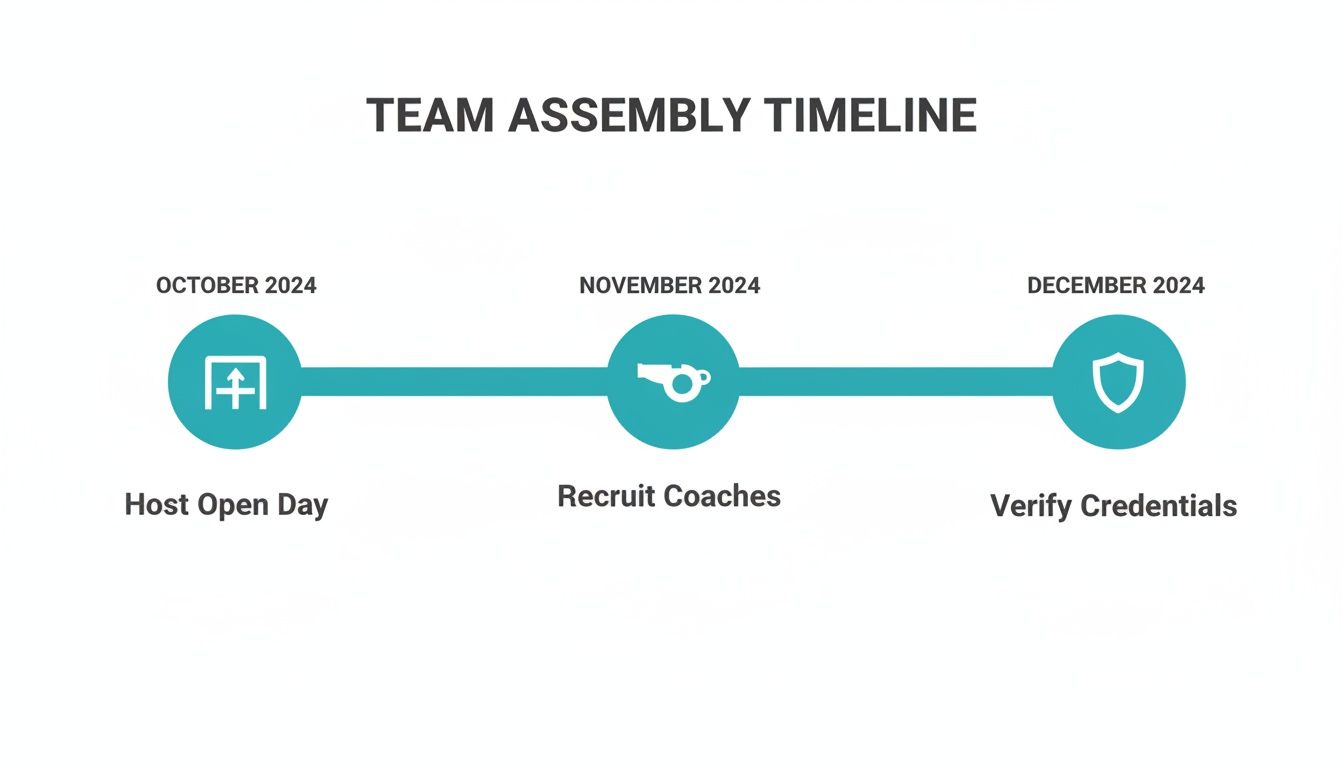
Following a structured approach like this ensures you cover all the bases, building a strong foundation of talent and trust before the season even begins.
Bringing Your Season to Life with Seamless Organisation
You’ve built your teams, your coaches are fired up, and the smell of freshly cut grass is in the air. This is the moment your club stops being a plan on paper and starts breathing, becoming a real, living part of your local football community. It's time to get on the pitch. But first, we need to master the behind-the-scenes work that turns a group of players into a well-oiled machine, ready for the season ahead.

Running a season can feel like a game of chess; you always need to be thinking a few moves ahead. From joining a league and decoding fixture lists to juggling training sessions and preparing for matchday, the admin can quickly pile up. The trick is to turn that potential chaos into controlled, organised excitement.
Navigating the World of Leagues and Fixtures
Your first big step into the world of competitive football is joining a local league. Get in touch with your County FA—they’re your best resource for finding the right league for your club's age groups and skill level. It's a vast network out there. To give you some perspective, there are over 7,000 clubs at Step 7 of the grassroots pyramid alone, all competing across more than 50 regional leagues.
Once you're in, you’ll get your fixture list. It’s a genuinely thrilling moment that makes everything feel real, but it’s also where the hard graft of organisation kicks in. You'll need to coordinate pitch availability, lock in kick-off times with opposing managers, and make sure a referee is booked for every single home game.
Your real goal is to create a seamless matchday experience where the only thing your coaches and players have to worry about is the game itself. Getting the logistics right behind the scenes makes that possible.
Traditionally, this has meant drowning in spreadsheets, chaotic group chats, and endless back-and-forth phone calls. Thankfully, modern club management tools have completely changed the game. Imagine a system where your entire fixture list is pulled directly into a central club calendar, instantly visible to every coach, player, and parent. That's how you get your time back.
Mastering Your Club’s Schedule
A well-organised schedule is the heartbeat of a successful club. It’s the single source of truth that tells everyone where they need to be and when, and it’s about so much more than just matchdays.
A truly central schedule pulls everything together:
Training Sessions: Booking those regular slots and communicating them clearly.
Matches: Logging all your home and away fixtures, complete with locations and kick-off times.
Team Events: Adding social get-togethers or fundraising events to the calendar so nothing gets missed.
When you manage this properly, you eliminate those dreaded double-bookings and last-minute panics that frustrate everyone. It gives families the clarity they need to plan their weeks around the club, building a sense of trust and professionalism.
The admin burden is no joke. In fact, FA data from 2023 revealed that scheduling mix-ups are responsible for nearly 30% of all common match forfeits in grassroots football. This is where a unified platform becomes your most valuable player. A central dashboard that handles everything from RSVPs to automated reminders gives you a massive advantage. You can dive deeper by exploring our guide on choosing the right club management software to see just how these tools can lift your club.
Streamlining Communication and Availability
With the schedule locked in, your next challenge is communication. How do you find out who’s available for the big match on Saturday? Chasing RSVPs through a tangled web of text messages and email threads is a surefire recipe for headaches and missed information.
This is exactly why having a dedicated app for guardians and players is a game-changer. When a parent can instantly RSVP for a match or training session right from their phone, you get a real-time, accurate picture of player availability. It lets coaches plan their sessions and pick their matchday squads with confidence, knowing exactly who they can count on.
By bringing all your season’s logistics into one place, you do more than just get organised—you build a connected, engaged community. You’ll spend far less time wrestling with spreadsheets and far more time celebrating goals, developing talent, and simply enjoying the journey you worked so hard to start.
The First Whistle Is Just the Beginning
Congratulations. You’ve actually done it.
All that planning, the mountain of paperwork, and the sheer passion have all paid off. The kits are laid out, the teams are registered, and that first match is circled on the calendar. Your football club is no longer just an idea; it’s real.
But this moment, hearing that first whistle blow, isn't the finish line. It's the start of an incredible journey. This is where the legacy you're building for your community truly begins.
Take a second to look back at everything you’ve conquered. What started as a conversation between friends has grown into a fully-fledged club ready to inspire young athletes. You’ve built the foundation, put together a team of coaches and volunteers, and organised an entire season. The hard part is done. Now the real fun begins. Your focus shifts from creation to cultivation.
Cultivating Your Club’s Culture
The challenge now is to keep the fire lit and maintain the momentum you’ve worked so hard to build. This is about more than just winning matches; it’s about nurturing a positive, enduring culture that becomes your club's true identity. This is the spirit that keeps players coming back, makes volunteers feel valued, and gives families a reason to be proud they’re part of your community.
This living, breathing culture is built in the small moments, week in and week out:
Celebrate the effort, not just the outcome. A perfectly timed tackle deserves just as much praise as a winning goal. This is how you teach resilience and true sportsmanship.
Empower your coaches. Keep supporting their development and trusting their vision. Great coaches are the heart and soul of any great club.
Keep your community close. Make sure parents are involved and informed. Treat them like genuine partners in this journey, because they are.
Remember why you started this in the first place. You're not just creating a football team; you're building a community hub, a place where people can grow, and a source of local pride that will echo for years to come.
Your legacy won’t be defined by a single season's results. It’s measured in the players who grow in confidence, the friendships forged on the pitch, and the positive mark your club leaves on its corner of the world.
Every training session, every match, and every team talk is a new opportunity to strengthen that legacy.
Your journey is just beginning.
Your Questions Answered
Starting a new football club is a huge adventure, full of big dreams and tiny details. It's completely normal to have a million questions buzzing around as you get going. We've been there. So, we've pulled together some straight-talking answers to the questions we hear the most, hopefully giving you the clarity and confidence to take that next step.
How Much Does It Really Cost to Start a Youth Football Club?
Let's be realistic—getting a new youth club off the ground isn't free, but it doesn't have to break the bank either. Typically, you should budget somewhere between £2,000 and £10,000 for your first year. That range covers the essentials to get your team kitted out, registered, and ready to play.
So, where does that money go? Here’s a quick breakdown:
Affiliation and League Fees: Getting affiliated with your County FA will cost around £100-£200 per team. Then you have league entry fees, which can be another £150 or more on top of that.
Insurance: This is a non-negotiable. Public liability insurance is your safety net, and you can expect this to be over £500 for the year.
Pitches and Equipment: This is often the biggest variable. Pitch hire can be anywhere from £50-£100 a session. A solid starter set of kits, balls, and cones can easily run past £2,000.
Mapping all this out in a simple budget from day one is the single best thing you can do to stay in control of your finances.
What Are the Most Important Committee Roles We Need to Fill?
A dedicated committee is the heart and soul of any successful club. They provide the structure and leadership that turn a good idea into a great community organisation. While you'll welcome all the help you can get, there are a few roles that are absolutely critical.
At the bare minimum, you need these three people in place:
A Chairperson to lead the way and keep everyone focused on the vision.
A Club Secretary to handle the admin and be your main link to the County FA.
A Treasurer to look after the money, from setting the budget to chasing subs.
And if you have players under 18, which most new clubs do, the Club Welfare Officer is a mandatory and perhaps the most important role of all. This person is your champion for safeguarding, ensuring every single child has a safe, positive experience with your club.
Safeguarding isn’t just a box to tick; it’s the absolute foundation of a trusted and respected youth sports club. It’s what lets parents know their children are in good hands.
How Do We Ensure Our Club Is Compliant With Safeguarding Rules?
Creating a safe space for your players is your number one responsibility. The first, most critical step is to appoint a dedicated Club Welfare Officer who has gone through all the required FA safeguarding courses. They will be the person who lives and breathes this stuff.
From there, every single adult who has regular contact with your players—coaches, volunteers, committee members—must have an enhanced DBS check. There are no exceptions. It’s also vital that you officially adopt the FA’s Respect code of conduct and make sure it’s understood by everyone—players, parents, and coaches alike. This sets the standard for behaviour on and off the pitch from the very beginning.
What Is the FA Charter Standard and Is It Worth It?
Think of the FA Charter Standard as a quality mark. It's an official accreditation that tells everyone your club is well-run, safe, and dedicated to providing high-quality grassroots football. Earning it is a powerful way to show your community what you stand for.
Is it worth the effort? Absolutely. Charter Standard clubs often unlock doors to extra funding, get better support from the FA, and build a fantastic reputation locally. That kind of recognition is invaluable when you’re trying to attract new players, passionate volunteers, or even local businesses who want to sponsor a club that does things the right way.
Starting a club is a massive undertaking, but you shouldn't be drowning in spreadsheets and WhatsApp group chaos to manage it. Vanta Sports brings your entire club—from the admin team and coaches to parents and players—together on one simple, connected system. You can sort scheduling, automate payments, and give everyone the professional experience they deserve. See how Vanta Sports can help you build your legacy.
Comments